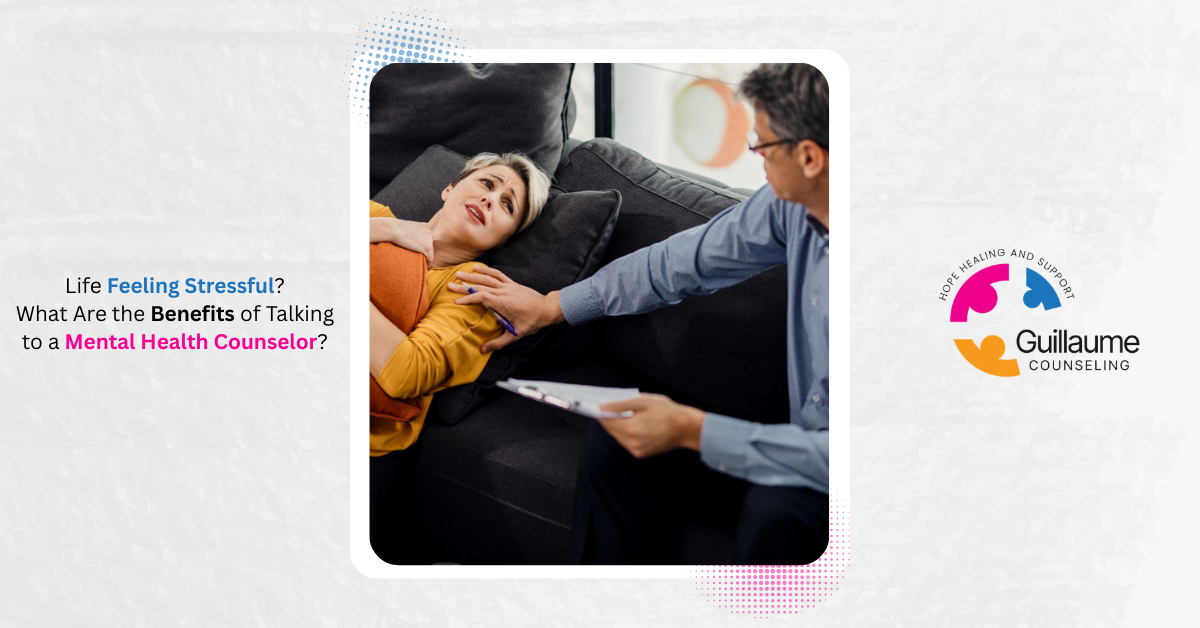
Life Feeling Stressful? What Are the Benefits of Talking to a Mental Health Counselor?
Stress is something most people experience at different points in life. It might start very subtly, little things, daily, or the daily burden and eventually escalate into something bigger. In the long run, stress, if uncontrolled, may have an impact on mood, energy levels, sleep and well-being.
Talking to a mental health counselor can provide meaningful support during these times. Counseling offers a safe, confidential space to explore your feelings, better understand your challenges, and develop healthier ways to cope.
Guillaume Counseling may support individuals in managing stress through professional guidance and compassionate care, helping them work toward clarity, balance and emotional strength.
Why Life Can Feel Stressful
Today’s life involves various demands that often arise at once. A balance between responsibilities may be tiresome and there may be no time to relax or rejuvenate.
Some common causes of stress include:
Work or school pressure
Family duties
Money problems
Health worries
Social expectations
When stress builds up, a person may feel:
Tired
Irritated or upset
Unable to focus
Trouble sleeping
Overwhelmed or stuck
Talking to someone can help you slow down and understand your feelings better.
What Does a Mental Health Counselor Do?
A mental health counselor gives you a safe space. It’s non-judgmental. You can express yourself freely here.
In a counseling setting, you may experience:
A safe and confidential space
Active listening without judgment
Guidance in exploring your experiences
Support in identifying potential stress triggers
Assistance in developing practical coping strategies
At Guillaume Counseling, each person is treated with care. Sessions are made to fit each person’s needs and pace.
Key Benefits of Talking to a Mental Health Counselor
1. Feeling Heard
Many people keep their stress to themselves due to limited support or concerns about being misunderstood.
Counseling provides:
A space where your voice can be heard
A supportive presence that acknowledges your experiences
An opportunity to express emotions freely
This experience may help reduce emotional burden and create a sense of relief.
2. Understanding Your Stress
Stress is not always immediately obvious. Sometimes, root factors may be hidden within daily routines and patterns.
A counselor can help you:
Recognize patterns in thoughts and behaviors
Identify potential triggers that increase stress
Gain a clearer understanding of emotional responses
Building this awareness may be a key first step toward substantial change.
3. Developing Healthy Coping Strategies
Stress may not be removable, but it may be managed in a better manner.
Counselors can teach simple ways to handle stress, such as:
Deep breathing
Relaxing your body
Managing time
Setting limits with others
These strategies fit individual lifestyles and apply to real life.
4. Improving Emotional Awareness
Many individuals face feelings without thoroughly knowing them.
Through counseling, you may:
Learn to identify and name emotions
Explore what may trigger certain feelings
Respond more thoughtfully rather than react impulsively
This awareness can help with emotional control. It also leads to better decisions over time.
5. Learning How to Set Healthy Boundaries
Boundary issues can also be a source of higher stress and burnout.
Counseling can support you in:
Understanding personal limits
Practicing saying no when appropriate
Prioritizing your well-being
Protecting your time and energy
Boundary-setting may develop into a more instinctive and empowering skill with practice.
6. Reducing Feelings of Isolation
Stress can feel very lonely. It’s hard when you think no one gets it.
Counseling may provide:
A sense of connection
Emotional support
An opportunity to feel accompanied through challenges
You don’t have to navigate difficult experiences alone.
7. Getting Clear Thoughts
When pressure reaches its height, thoughts may seem disorganized or daunting.
Counseling can help you:
Slow down and organize your thoughts
Consider situations from different perspectives
Break concerns into smaller, manageable steps
This process may support clearer thinking and more confident decision making.
8. Building Inner Strength
Resilience can be defined by people as the ability to adapt and deal with life difficulties.
Through counseling, individuals can:
Handle pressure better
Adapt to tough situations
Build confidence for future challenges
Resilience builds over time and may improve with continuous support and regular practice.
What to Expect in a Counseling Session
Each counseling session is unique and guided by individual needs.
You may:
Discuss current challenges
Explore past experiences
Learn coping techniques
Reflect on personal growth
Some sessions may be more thoughtful, while others can prompt intense emotional investigation. Both are essential elements of the process.
Counseling can be challenging, yet it fosters self-awareness, understanding and enduring wellness.
Why Choose Guillaume Counseling
At Guillaume Counseling, we recognize that stress can be complex and influenced by many factors.
We offer:
A kind and caring environment
Personalized counseling tailored to individual needs
Practical tools that can be applied in daily life
A focus on ongoing emotional growth and understanding
Our approach is to assist people in making a step toward feeling rooted, balanced and supported in their lives.
Start Your Journey toward Balance Today
If stress is making life hard, help is available. Talking to a counselor can help you understand your feelings and learn ways to manage stress.
At Guillaume Counseling, we are here to support you with care, respect and professionalism.
Taking the first step to reach out can open the door to a supportive conversation that may help you move toward a healthier and more balanced life.
FAQs
Can counseling solve all my problems?
Counseling can help you know more about your problems and deal with them. But it cannot fix everything and progress takes time.
Will the counselor tell me what to do?
A counselor does not usually give direct instructions and orders. Instead, they can instruct you by posing questions, giving observations and assisting you in exploring the potential possibilities so that you can come up with your own informed choices.
Is It Normal to Feel Uncomfortable in Family Therapy Sessions?
Family therapy can feel strange at first. Imagine finding yourself in a room with your parents, siblings or even your partner, and you share feelings that were not explored years ago. That situation alone can make anyone uneasy.
At Guillaume Counseling, we often see families walk into therapy with mixed emotions. Some feel hopeful. Some feel worried. Others are not confident in the process. Sharing personal thoughts with relatives can be tough
Many people starting family therapy ask, “Is it normal to feel uncomfortable during family therapy sessions?”
Below, we explain why discomfort may happen, what families may experience in sessions and how therapy can create a safe space for honest conversation.
Understanding What Family Therapy Is
Family therapy is a counseling approach concerned with relationships within a given family system rather than an individual.
Therapists do not approach problems in one way; they examine the behavior of family members, how they interact and communicate and how they impact each other emotionally and behaviorally.
This strategy acknowledges that families are ecosystems, in which a single component can vary and affect the whole system.
Is It Normal to Feel Uncomfortable in Family Therapy Sessions?
Yes. Feeling uncomfortable in family therapy is common.
Family therapy lets people share feelings. These feelings may have been hidden for years. As those emotions surface, tension may naturally arise.
Individuals may worry about being criticized. They might be angry when such tough issues arise. Such reactions may occur in both adults, teenagers and children.
Physical discomfort does not indicate therapy failure. It often signals the healing journey, indicating that crucial issues are beginning to surface.
Why Family Therapy Can Feel Uncomfortable at First
Some people may feel uncomfortable because:
They are not used to sharing emotions openly
They worry about how family members may react
They feel nervous about being misunderstood
They are unsure about the role of the therapist
They fear conflict may increase during discussions
Such reactions are instinctive, given that family relationships are highly emotional. In a therapy room, the setting may be very different from real-life communication when sensitive topics arise.
Discomfort can mean that meaningful topics are being explored.
The Role of a Family Therapist
A therapist may lead a discussion to help family members communicate and understand one another.
At Guillaume Counseling, professionals may use evidence-based therapy approaches, including
Cognitive Behavioral Therapy
Solution-Focused Brief Therapy
Strategic Structural Family Therapy
The Gottman Method
These strategies help families analyze their thoughts, patterns, and communication styles. The therapist does not take sides. Rather, they also assist family members in listening, reflecting and seeking new forms of engagement.
Families can have structured or informal therapy sessions. They can engage in conversations based on their specific needs.
Common Emotions during Family Therapy
Numerous feelings may be expressed during family therapy, and these may vary from session to session.
Families may experience:
Nervousness
Individuals can be too afraid to discuss personal matters. It is strange to be in a room with a therapist.
Frustration
Some talks can bring back memories of old conflicts. This can cause annoyance or frustration.
Relief
Many people feel better after sharing their hidden thoughts, even if it’s a hard talk.
Confusion
At times, family members may feel unsure about their feelings or how to explain them.
Hope
As therapy continues, families can feel hopeful. They start to understand each other better.
Each of these emotions may naturally arise during therapy. No single session defines the entire process.
Talking About Sensitive Family Topics
Family therapy often focuses on topics that affect daily life. These topics may include:
Communication problems
Parenting disagreements
Stress at home
Emotional distance between family members
Major life changes, such as divorce or relocation
When topics are discussed openly, conversations can turn fervent. Family members may finally be honest about how they really feel.
At Guillaume Counseling, we help families have respectful conversations and create understanding.
How Therapy Creates a Safe Space
A safe space in therapy does not mean every moment feels comfortable. Instead, it means there are clear boundaries and respectful communication.
Therapists may support a safe environment by:
Encouraging each person to speak without interruption
Helping people express their thoughts calmly
Guiding conversations away from blame
Asking questions that promote reflection
Within this environment, families may notice patterns in their communication. Once these patterns become visible, families can explore healthier ways to respond to one another.
Different Beliefs and Values in Family Therapy
Families tend to bring belief systems to therapy. Some people value faith, spirituality, or religious guidance. Others are atheists, agnostics, or spiritual but non-religious.
At Guillaume Counseling, we respect these differences. Faith-based counseling can help individuals who want to incorporate spiritual practices into their therapy.
Options may include:
Christian counseling
Prayer support upon request
Faith-centered reflection
Some therapists offer secular counseling without religious aspects. Clients can ask for clinicians who share their beliefs.
Belief systems affect family values, communication and life choices. Therapy can provide a space to discuss these differences respectfully.
Why Honesty in Therapy May Feel Difficult
Being honest with family can be difficult.
Many people learn to hide their feelings to avoid arguments.
In therapy, people may say things like:
“I felt hurt when that happened.”
“I wish we had talked more.”
“Sometimes I feel misunderstood.”
These words can feel scary to say.
But honest conversations can help family members better understand one another.
Tips for Managing Discomfort in Family Therapy
These small tips may help:
Be honest about your feelings. You can tell the therapist if you feel nervous.
Take your time speaking. It is okay to pause and think.
Listen to others carefully. You may learn new things about how they feel.
Be patient. Feeling comfortable takes time.
Ask questions. The therapist can explain anything that feels confusing.
Considering Family Therapy for Your Family
If your family is thinking about therapy, it’s normal to have mixed feelings.
Feeling uncomfortable during therapy does not mean that something is wrong with you or your family.
It often means you are brave enough to talk and listen.
At Guillaume Counseling, clinicians work with families from many backgrounds. We use an evidence-based practice that adapts to meet each family’s specific needs during sessions.
Visit the Guillaume Counseling website to learn about their services. You can also see if family therapy is a good fit for you by requesting an appointment.
FAQs
What if one family member does not want to join?
Therapy works best when everyone participates, but sometimes the therapist can start with brief conversations or individual sessions.
Can family therapy improve relationships?
Yes. Many families learn better ways to communicate and solve problems together.
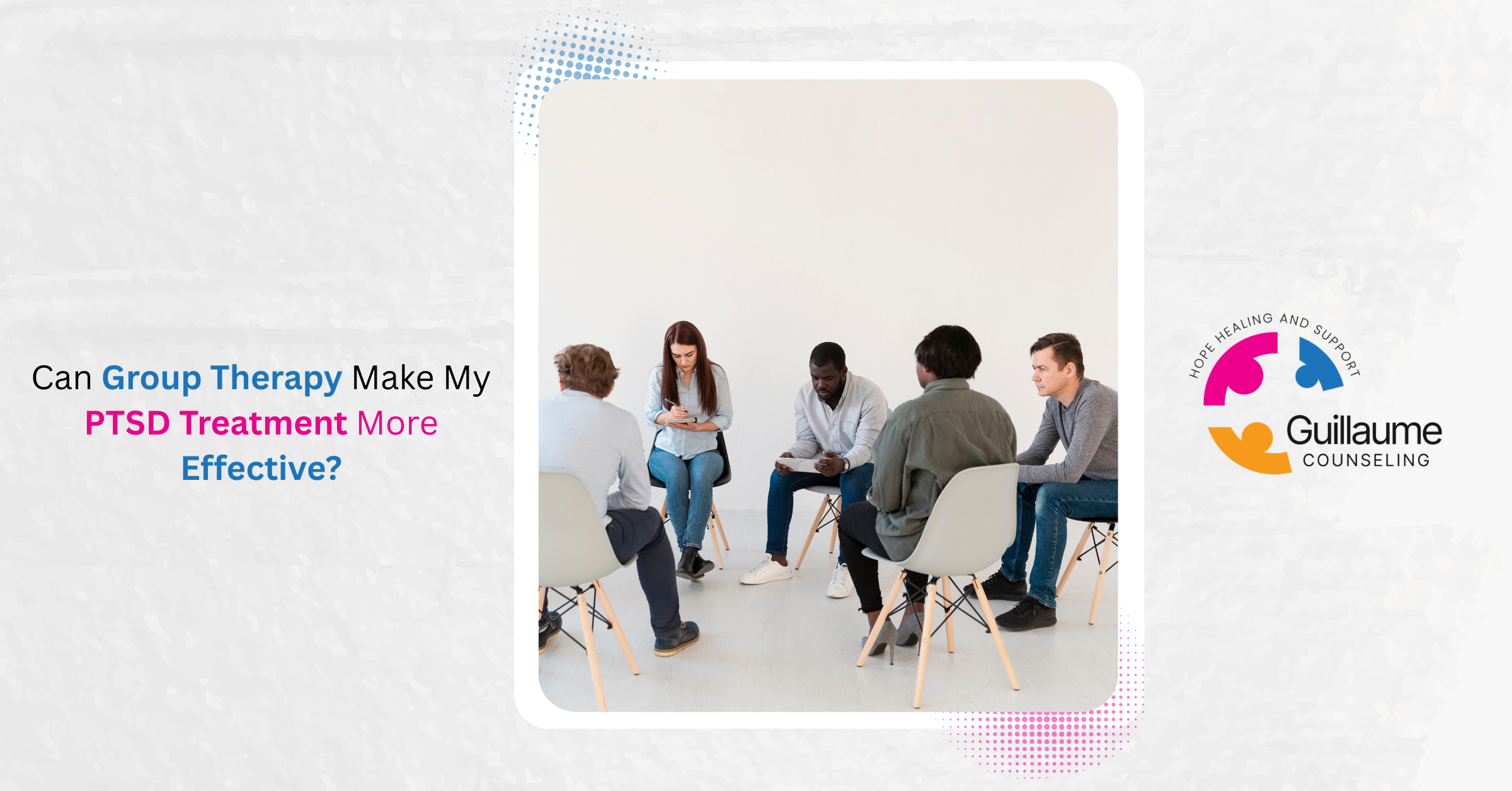
Can Group Therapy Make My PTSD Treatment More Effective?
Living with PTSD can feel very hard. A person may remember a scary event again and again. They may feel afraid or worried. Daily tasks may feel harder. Some people may also feel alone.
When people start therapy for PTSD, they may hear about different kinds of help. One option that may be suggested is group therapy. Many people ask an important question before joining a group.
Can group therapy make my PTSD treatment more effective?
The answer may be different for each person. For some individuals, group therapy can assist in the healing process in some positive ways. Other people will find it better in another form of support.
Knowing how group therapy can help you decide if it’s right for you.
What Is Group Therapy?
Group therapy is counseling for a small group with a licensed therapist. Many members may have similar worries. These include trauma, stress or relationship issues.
During sessions, participants may:
Talk about their experiences
Share thoughts and feelings
Listen to others
The therapist helps guide the conversation and maintains a safe and respectful space.
Some groups are structured with a topic for each meeting. Other groups can be more open minded. At Guillaume Counseling, group therapy might use proven methods like:
Cognitive Behavioral Therapy (CBT)
Solution-Focused Brief Therapy (SFBT)
These methods can assist the participants to learn about thoughts, feelings and actions in a conducive environment. Groups may also be designed to respect cultural backgrounds and personal values.
Why Some People with PTSD Consider Group Therapy
PTSD can create a strong sense of isolation. Some may think that no one understands their pain. Group therapy can help reduce this feeling for some individuals.
Benefits may include:
Meeting others with similar experiences
Sharing coping ideas
Receiving encouragement and empathy
Learning that healing is possible
Still, group therapy may not feel comfortable for everyone. Some people may want more time before sharing personal stories.
Learning from Shared Experiences
In group settings, participants may learn from one another. For example:
One person may share a way they calm down when stressed
Another person may explain how they deal with strong feelings
These ideas may help others in their daily life.
It may be difficult to trust other people because of PTSD. A secure group may assist certain individuals to gradually restore faith. Growth is a personal thing and, in most cases requires time.
Emotional Support from Peers
Group members often show kindness to each other.
For someone with PTSD, this support can feel very helpful. It reminds them they are not alone.
Sometimes hearing other stories can feel emotional. A therapist helps keep the conversation safe.
If someone feels overwhelmed, the therapist may suggest a break or a calming exercise.
Building Communication and Relationship Skills
PTSD can affect relationships. Some people may stop talking with others or hide their feelings.
Group therapy can help people practice:
Speaking about feelings
Listening to others
Showing empathy
Over time, people may feel more confident talking with others over time. This growth happens at different rates for each person.
When Group Therapy May Not Feel Right
Group therapy is not the best choice for everyone.
Some individuals may prefer:
Individual therapy
Support outside of group settings
Time before discussing trauma in a group
These preferences are valid. Mental health care can be most effective when individuals make decisions that seem safe and supportive. The various possibilities can be explored with the help of a therapist.
Combining Group Therapy with Other Support
Group therapy is often only one part of treatment.
Some people do both:
Individual therapy
Group therapy
Others may also get help from workshops, family counseling, or community programs.
At Guillaume Counseling, therapists may work with other professionals to support each client’s needs.
Final Thoughts
Recovering from PTSD is a gradual process that involves small steps. Group therapy can provide a space to connect with others who understand trauma.
To get started, ask a trained clinician about your options and the potential benefits and risks.
If you want to learn more about group therapy or how it may fit with your care, you can contact Guillaume Counseling.
FAQs
Will group therapy cure PTSD?
Therapy cannot promise a cure. PTSD is complex. Therapy can help people learn coping skills and get support.
Do I have to share personal stories?
No. Sharing is usually encouraged but it is not forced. You can decide what to share. Groups should respect your comfort.
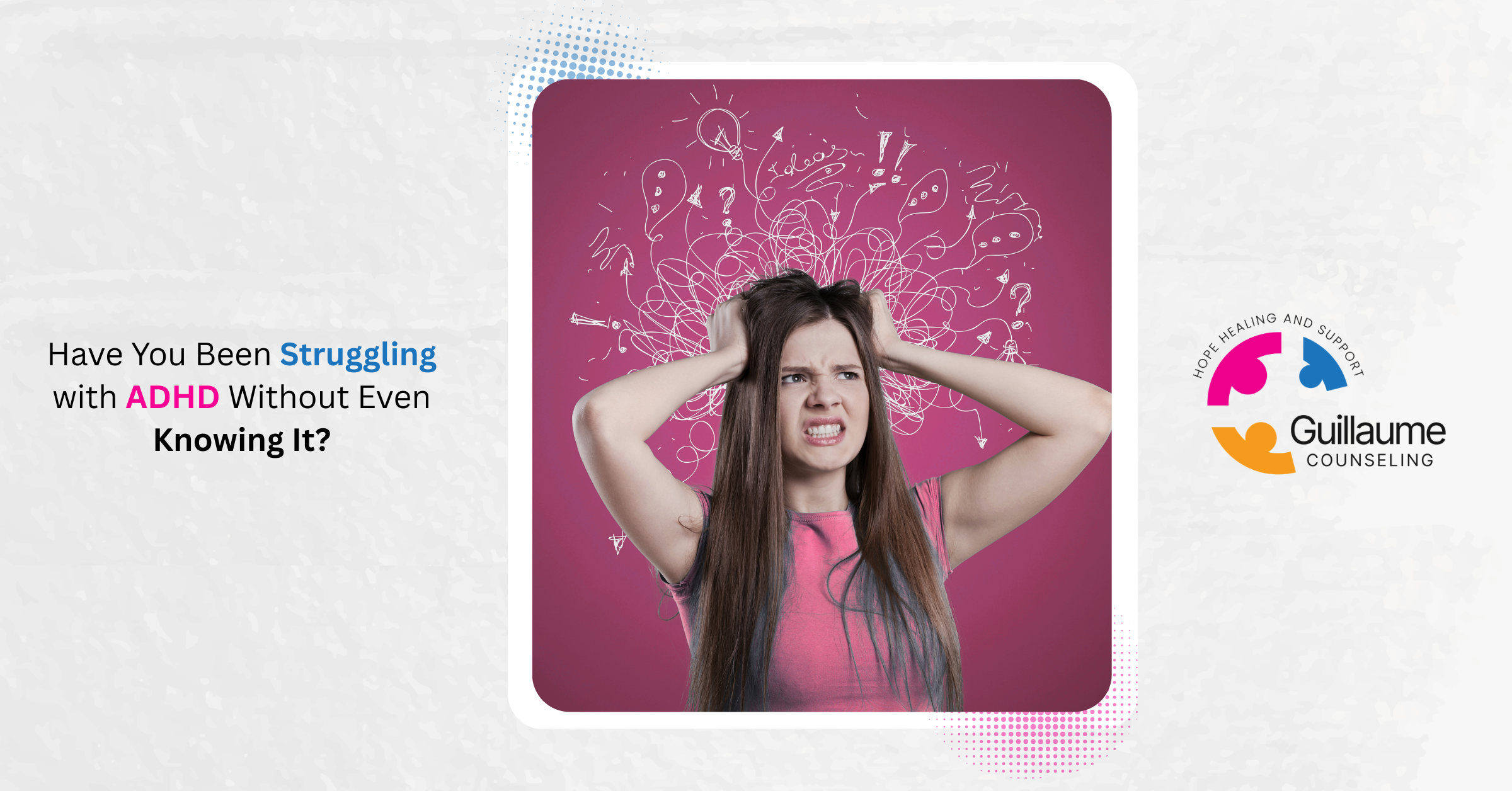
Have You Been Struggling with ADHD Without Even Knowing It?
You’ve been given the same advice over and over again. “Just focus,” “don’t daydream,” “get back on track,” “limit the distractions.”
Then, you set the same reminder three times, and still miss it.
You have good intentions when starting these tasks, and then, somehow, within the blink of an eye, you find yourself doing five other things. Sound familiar?
Think about this. Adults have lived with unrecognized ADHD for decades.
Instead of seeking a professional opinion, people tend to dismiss their behaviors as lazy, anxious, or “that’s just how they are.”
What if there is more to the story?
What ADHD Looks Like in the Real World
Most individuals see ADHD as a hyperactive child.
That is just one example and misses a large part of the community.
It includes the majority of adults, women, and people whose symptoms are on the lower end of the hyperactive spectrum.
Attention-Deficit/Hyperactivity Disorder is a neurodevelopmental disorder that affects:
Executive functioning
Working memory
Control over emotions
Focus
It is also highly individualized and manifests in a multitude of different ways.
Commonly Missed Symptoms
Chronic procrastination can feel like laziness, but it often stems from a lack of dopamine and difficulty starting tasks
Conversely, hyperfocus episodes can lead to a person losing several hours of time and can lead to difficulty switching tasks to other, potentially more important things
Dysregulation of emotions can lead to someone feeling a high level of frustration or disappointment, regardless of whether the situation might call for it
Time blindness can be a result of real neurological issues, which lead to difficulty in seeing how much time has gone by
Routines can be forgotten, and this can even happen to someone regarding things that they find important
Racing thoughts can lead to issues with winding down, and can lead to someone feeling like they can’t sleep
Impulsive action can be taken, and this can lead to impulsive spending or commitments
If you see yourself in much more than just a few of these, then you should likely be paying more attention to them.
Why Many Adults Remain Undiagnosed
People who tend to be high functioning often develop compensatory strategies, and that often leads to things being missed.
They tend to work more than others.
From the outside, it can look like everything’s working. From the inside, it can be a lot of work, and it can be mentally exhausting.
Other Conditions That Overlap
There is a high degree of overlap of ADHD with many other anxiety disorders, major sleep disorders, major depressive disorder, and sleep disorders.
This comorbidity makes it particularly difficult to get a proper diagnosis, and many people end up getting treatment for the secondary condition, while the underlying issues that cause ADHD go completely unresolved.
Inattention symptoms that are more subtle and internal rather than external are particularly found to be underdiagnosed in females.
Reach Out to Guillaume Counseling
If you want to learn more about ADHD and its specific symptoms, get in touch with us at Guillaume Counseling.
We can help you understand what you’re dealing with.
FAQs
Can ADHD develop in adulthood?
ADHD is a developmental condition, i.e., it begins during childhood.
The condition is, however, mostly not detected until one reaches adulthood because the requirements of life of an individual outmatch their coping capacity.
What is the difference between inattentive and hyperactive ADHD?
The inattentive type (which was called ADD) is defined by the inability to maintain attention and organization.
The hyperactive-impulsive type can be defined as being restless and having the habit of interrupting or speaking out of turn.
The integrated presentation category refers to a combination of the two.
Does anxiety cause any symptoms that could be considered to be ADHD?
Yes.
Anxiety disorders, mood, and sleep can all show symptoms that are consistent with those of ADHD.

What Healthy Habits Should Multi-Ethnic Couples Develop Early in Marriage?
Marriage is a journey. It requires time, patience and hard work. This is especially true for multi-ethnic couples who navigate different cultures. Early marriages often shape habits that support a lasting relationship.
Developing simple habits for marital happiness during this period may help couples prevent misunderstandings, strengthen their connection, and create a foundation of trust.
At Guillaume Counseling, we provide couples counseling to help multi-ethnic couples learn habits that may promote respect, communication and emotional closeness while acknowledging that therapy outcomes are unique to each couple.
Prioritize Open and Honest Communication
One of the most important habits of healthy couples is developing strong communication. Multi-ethnic couples may face extra challenges like cultural differences and customs.
Clear and respectful communication can help both partners feel heard. Couples can focus on:
Actively listen to the partner and hear their perspective
Be open to sharing respectfully
Have routine discussions on feelings, plans or concerns
Communication does not resolve all issues, but it helps to minimize misunderstandings and build trust. Guillaume Counseling helps couples improve their communication skills.
Understand and Respect Cultural Differences
Cultural diversity may enrich but also lead to tension. Good practices towards adapting to cultural differences include:
Celebrate holidays and special days from both cultures
Talk about family values and compromises that will be beneficial to both spouses
Do not assume beliefs or customs, but ask questions
Acknowledging and respecting each other’s cultures may foster appreciation and deepen the emotional bond in a marriage with different cultures.
Develop Financial Transparency
Money issues can also affect marriage happiness, particularly when partners hold divergent views and values about money. Some of the habits to be adopted at an early age to facilitate financial harmony are:
Talk about finances, savings and money ambitions
Plan for expenses like housing, vacations or investments together
Find compromises that honor both partners’ values
Being transparent about finances may reduce stress and create a sense of shared responsibility.
At Guillaume Counseling, we can help couples develop financial habits that promote shared responsibility and minimize stress.
Cultivate Emotional Awareness and Regulation
Marriage requires emotional resilience. Couples may face external pressures, including family expectations or cultural judgments. Healthy marriage habits include:
Notice your own feelings before you talk
Try to understand how your partner feels
When you feel worried or upset, try deep breaths, quiet time, or writing it down
These habits support better conflict resolution and help couples stay emotionally connected.
Establish Conflict Resolution Strategies
Disagreements are normal, but learning to manage conflict early can prevent escalation. Couples can focus on:
Addressing multi-ethnic and interracial marriage issues early
Avoiding blame
Find solutions that work for both partners
By creating these conflict habits, couples maintain harmony while respecting each other’s viewpoints.
Guillaume Counseling’s Couple Counseling offers practical tools for resolving disagreements before they escalate.
Create Shared Goals and Values
Multi-ethnic couples benefit from discussing shared life goals, including:
Talk about having kids and how you would raise them
Help each other with work or school
Decide together where to live and what rules you will have
When you make the same goals, you feel closer.
Maintain Physical and Mental Well-Being
A healthy marriage grows when both partners care for their physical and mental health. Couples can practice:
Play and exercise together. It’s fun and keeps you strong.
Cook and eat healthy foods.
If someone feels very sad or worried, tell a grown-up or a doctor.
Build a Support Network
Supportive connections enhance relationship resilience. Multi-ethnic couples may:
Connect with peers who have similar experiences
Build positive relationships with both families
Seek counseling or workshops to navigate challenges
Support networks can offer comfort and advice during tough situations.
Foster Intimacy and Affection
Intimacy is not only about physical contact but also about emotional intimacy.
By showing minor signs of love and discussing something important, couples may grow closer.
Gathering hands, embracing and sharing dreams and concerns help them get to know each other. Their bond and trust also grow stronger through quality time together such as cooking or walking.
Commit to Continuous Learning
Marriage evolves. Couples may enhance their relationship by:
Be familiar with communication, culture and emotional intelligence
Join seminars or online events tailored for couples
Analyze strengths and weaknesses
Ongoing education can keep a marriage lively, strong and fulfilling.
Final Thoughts
Early years of marriage are a good time to grow habits that help you both. These healthy habits can make love feel steady. They can help two people build a home that is safe and warm.
If you want support, a counselor can listen and offer ideas you may try together.
We can help multi-ethnic and interracial couples build healthy habits at Guillaume Counseling. Each marriage is unique, and early help makes a difference. Contact us.
FAQs
How can we create shared goals as a couple?
Talk about what you both want for family, jobs, and life. Pick a few things to do together.
Why are healthy habits important for multi-ethnic couples?
Healthy habits may help you understand each other and feel safe and loved.
“Disclaimer:
AI Use Disclosure
Some content on this website may be developed or assisted by artificial intelligence (AI) tools and is reviewed by our team for accuracy and relevance. We are committed to transparency and compliance with applicable California, Oregon, and Texas laws regarding automated content and communications”
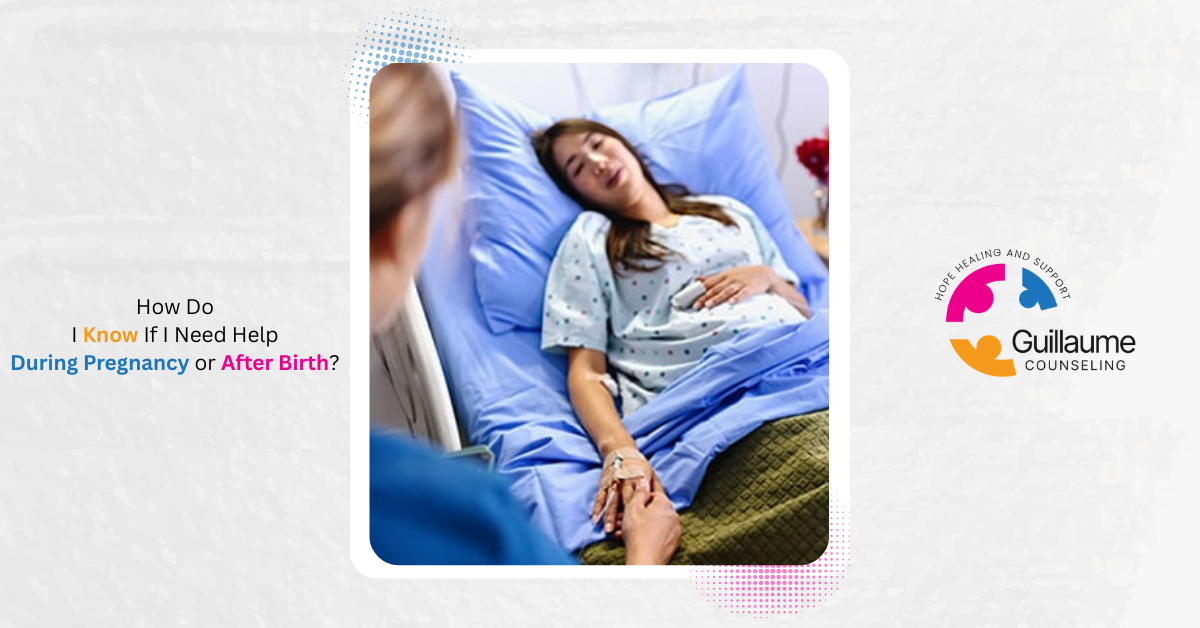
How Do I Know If I Need Help During Pregnancy or After Birth?
Being pregnant or having a new baby can feel big and exciting.
It can also feel tiring, scary, or overwhelming. One moment, you may feel happy. The next moment, you may feel sad or worried. Many feelings are normal.
But if hard feelings stay a long time or make daily life harder, extra support may help.
At Guillaume Counseling, moms and their circles may find care during pregnancy and after birth. We offer mental and emotional health support.
Here are a few quiet signs that it may be time to get in touch.
Signs You May Need Support
If you notice one or more of these things, you may want to talk to someone you trust or a mental health helper.
You often feel sad and may cry a lot
You worry constantly and feel scared or panicked by small things
You find it hard to sleep or you sleep too much
You have little interest in your baby or feel numb
You feel angry or irritable more than usual
You have trouble eating or you eat much more than before
If you think about hurting yourself or your baby, get help immediately
You feel very alone, even when people are near you
You cannot do daily things you used to do, like bath, eat, or care for your child
You worry about being a good mother and these worries keep you from enjoying the baby
You feel guilty, ashamed or like a failure most of the time
You may have one sign or many signs. If you notice these signs, connecting with a mental health professional at Guillaume Counseling may help you feel supported and understood.
Why Asking for Help During Pregnancy or After Birth May Be Good
Asking for help is not a weakness. It can be a smart step. Help can teach you ways to cope. It can help you feel less alone. It may help your baby and your family too. A helper can listen and offer tools that may make life easier.
What Kind of Help Can You Get?
Support can be of various kinds. A counselor can discuss the situation with you and propose solutions that will suit you. These may include:
Talk Therapy: This involves an encounter with a counselor. They can listen and help you find simple things to make you feel more comfortable.
Cognitive Behavioral Therapy: It may help in the transformation of anxious or gloomy thoughts into improved and gentler thoughts.
Solution-Focused Therapy: It can serve to highlight small, actionable strategies to navigate difficulties.
Dialectical Behavior Therapy (DBT): DBT may serve to impart strong emotion and stress skills.
Play and Art Therapy: It may be used in cases where the family or young children need to express themselves safely.
Couples or Family Therapy: It may assist couples and other family members to know how to support one another.
Religious Counseling: This may be a suitable option as long as you desire assistance with spiritual or religious beliefs.
Guillaume Counseling may use one or a mix of these approaches. Support is tailored to each person. No single method works for everyone.
How to Start
Starting can feel hard, but small steps can help.
You might:
Talk with a trusted friend or family member
Speak with your doctor or midwife
Call a counselor or clinic
Ask questions about what support looks like
It is okay to try more than one counselor until you find someone who feels like a good fit.
During your first visit at Guillaume Counseling, our counselor may ask about your sleep, mood, birth experience, and support at home. Together, you may create a simple plan. This plan can change as your needs change.
What to Expect from Counseling?
Counseling can be relatively peaceful.
The counselor may:
Listen without judgment
Ask gentle questions
Teach coping skills
Offer tools for stress and anxiety
Include your partner or family if helpful
Progress can take time. Guillaume Counseling does not guarantee results, but many people find that regular support may lead to minor, meaningful improvements.
When It Is Urgent
Seek help immediately if you feel unsafe or might hurt yourself or your baby. You can:
Call emergency services
Contact a crisis line
Call your doctor
Tell someone you trust
Go to a safe place
Quick help can protect you and your baby.
Small Steps You Can Try at Home
These steps can help while you find more support:
Tell one person how you feel.
Try to rest when the baby sleeps.
Eat regular, small meals.
Take short walks when you can. Fresh air may help.
Ask for help with chores or baby care.
Be gentle with yourself. You are learning.
Write one small thing you did right each day.
How Guillaume Counseling Can Help
Guillaume Counseling focuses on maternal mental health. We may offer care for people who are pregnant or who have given birth in the last year. We can offer individual, couple and family support.
Our approach may combine many therapies to meet your needs. We may include play and art therapy for families and children. We may also offer faith-based options. Our goal can be to support your values and help you feel more able to cope.
Final Words
You do not have to do this alone. If something feels off, trust your feelings. Asking for help can show you care about you and your baby.
Support can be gentle, respectful and made to fit your needs.
If you choose, Guillaume Counseling can be a place to begin. Contact us, we can listen and help you find steps that may work for you.
FAQs
Is seeking help only for mothers who are struggling a lot?
No. Support may be helpful for any parent. People look for support before a crisis arises, not only during emergencies.
How soon should I seek help after giving birth?
You may reach out anytime you feel worried, sad, or overwhelmed. Seek help right away if feelings are intense or you’re not safe.
Disclaimer: We are Healers. We work with people from all walks of life. We are not politicians, activists, evangelists, or preachers. We are Healers. We strive to hire employees of diverse backgrounds to serve a community who is diverse socially, politically, economically, religiously, racial, ethnically, and culturally.

How Can Culturally Sensitive Counseling Support Immigrant Communities?
Immigrating to a new country can be exciting but also bring many challenges. Learning a new language, adjusting to different customs, and understanding new rules can feel overwhelming.
For many families, these changes can affect mental health and well-being.
Culturally sensitive counseling can help immigrant communities feel understood and supported as they navigate these challenges.
At Guillaume Counseling, we understand that every immigrant story is different. Our work focuses on listening, learning, and respectfully providing support.
Understanding Culturally Sensitive Counseling
Culturally sensitive counseling is a form of mental health care that considers a person’s culture. Culture may encompass language, beliefs, family roles and traditions. These elements of life affect people’s cognitive processes, sentiments, and reactions to tension.
At Guillaume Counseling, we provide cultural services. These are vital for working with immigrant communities.
Challenges Immigrant Families May Face
Immigrant families may experience challenges that are different from those of other families. These challenges can include:
Learning a new language
Adjusting to new social rules
Feeling homesick or isolated
Facing cultural misunderstandings
Managing stress between parents and children
Children may adapt faster than adults. Parents can embrace the traditions of their mother country. Such differences may at times lead to tension or misunderstanding within families.
Mental health counseling helps immigrant families address concerns. We provide individual, couples and family therapy.
These services can be used together. A family may try family therapy and an adult may also try individual therapy.
Mental Health Counseling for Immigrant Families: What It May Look Like
Mental health counseling for immigrant families may begin with a conversation. The counselor may ask about:
Feelings
Needs
The move to a new country
School, work, and family life
The counselor can learn how culture shapes the family’s choices. They may suggest tools to manage stress and worry, which can include:
Breathing techniques
Sleep tips
Ways to talk kindly to each other
Counselors may use simple steps to guide families. They may teach families how to:
Set small goals
Practice helpful words and actions
These strategies can make everyday life feel easier. Additionally, the counselor may also help find other supports like community groups or translators.
How Mental Health Counseling for Immigrant Families Can Help
Therapy can help people feel heard. It can help families talk without blame. It can help parents and children understand each other.
Counseling may also help people handle changes, such as new jobs or schools. It may help people keep their culture while learning new ways. It can help mixed and multiracial families find balance.
At Guillaume Counseling, we work with intergenerational and intercultural issues. We address cultural assimilation. We can help clients face racism or bias in a safe space. We can help people find their strengths.
Therapy may sometimes make feelings feel stronger. Each person and each family is unique. We cannot predict what will happen in each case.
Language and Cultural Accessibility
Language can be a barrier for immigrant communities seeking mental health support. Culturally sensitive counseling often includes services in multiple languages, making therapy more accessible.
At Guillaume Counseling, we offer culturally specific services in multiple languages. Receiving support in a client’s first language helps them feel relaxed.
It can help them share their thoughts and feelings better. This can also lead to clearer communication during sessions.
Possible Benefits of Culturally Sensitive Counseling
Culturally sensitive counseling may support clients by:
Helping individuals feel understood
Supporting communication within families
Offering space to explore identity and cultural experiences
Reducing feelings of isolation
Counseling has varying effects on different individuals. Progress and comfort levels vary from person to person.
Conclusion
Immigrant families often face challenges that are shaped by their unique experiences. Culturally sensitive counseling may offer support by respecting cultural backgrounds. It can address family dynamics and provide services in multiple languages.
For immigrant populations, culturally focused mental health services may be a significant aid.
Guillaume Counseling offers mental health support for immigrant families, emphasizing cultural understanding, accessibility and personalized care. Reach out to us.
FAQs
Is counseling private?
The privacy of counseling sessions is not breached by law or ethics. Counselors adhere to the rules of licensing and ethics. It is possible to explain the privacy details in the first session.
How do I know if counseling is proper for me?
You can begin with either questions or a first visit. The initial meeting is usually a period of discussion and education. You can decide at your own pace if counseling feels helpful for you.
Disclaimer: We are Healers. We work with people from all walks of life. We are not politicians, activists, evangelists, or preachers. We are Healers. We strive to hire employees of diverse backgrounds to serve a community who is diverse socially, politically, economically, religiously, racial, ethnically, and culturally.
Why Do Some New Parents Feel Sad or Overwhelmed After a Baby Arrives?
Having a new baby is life-changing and not always the way people expect. Many new parents feel sad, anxious, or overwhelmed, and that’s more common than many realize.
At Guillaume Counseling Services, we provide support for families during pregnancy, postpartum, and beyond. Our goal is to help parents navigate emotional changes that may occur when welcoming a new baby.
Let’s explore why some new parents feel sad or overwhelmed after a baby arrives, and what can help.
Understanding Why Emotions Change After Birth
After giving birth, your body and mind go through significant changes. High hormones during pregnancy fall tediously. There can be a shortage of sleep, and the everyday lifestyle changes radically.
It is natural to be emotional. Feeling sad or overwhelmed doesn’t mean you’re a bad parent. It may be your body and brain adjusting to a big life change.
Some parents also experience depression after breastfeeding. This can happen because their hormones change or they face feeding difficulties. This is a common and treatable experience.
Maternal mental health counseling can be used if emotions feel heavy or if there is difficulty in handling them. Guillaume Counseling Services offers specialized therapy to help new parents explore and manage postpartum challenges.
Baby Blues vs. Postpartum Depression
Many parents experience the baby blues. This can include:
Crying more than usual
Feeling moody
Feeling easily upset
Baby blues usually go away within two weeks.
But sometimes the sadness lasts longer. This may be postpartum depression (PPD). Symptoms of PPD can include:
Continuous sense of despair or inadequacy
Loss of interest in previously enjoyed activities
Find it hard to get along with your infant
In some cases, early support can help parents deal with such problems.
Mental health support at Guillaume Counseling Services aids new dads in handling stress, anxiety, and emotions of being overburdened.
Why Some New Parents Feel Sad or Overwhelmed After a Baby Arrives
New parents may feel depressed or overpowered by several reasons:
Hormonal Changes
After birth, hormones change quickly. These unbalanced hormones after pregnancy can influence emotions and add to sensations of worry or sorrow.
Sleep Deprivation
New babies wake up often. When parents do not sleep enough, they may feel tired, stressed. Rest helps emotional well-being. Counselors teach parents ways to relax and reduce stress.
Adjusting to New Responsibilities
Life may suddenly revolve around feeding, changing and soothing a baby. It’s typical to feel overloaded. Family therapy can help the parents in learning how to relate, divide duties, and stay centered.
Anxiety About Your Baby
Some parents become anxious about the safety and health of their newborn. Despite being a regular emotion, extreme nervousness is heavy. Support can facilitate parents in securing coping resources to address fear.
Recognizing Signs of Anxiety or Depression
Seek help if you notice these signs:
Sad most of the time
Very worried all day
Angry or easily upset often
Disconnected from the baby
Overwhelmed for more than two weeks
A counselor or therapist can support parents. Guillaume Counseling Services provides therapy for pregnancy and postpartum mental health. This includes postpartum mood support. Our goal is to help parents develop skills to manage emotions and stress.
How Guillaume Counseling Services Can Support New Parents
At Guillaume Counseling Services, we recognize that each parent’s journey is unique. Support may include:
Individual therapy to help parents learn ways to navigate emotional and physical changes
Couples or family therapy to improve communication and balance responsibilities
Maternal mental health support for mood changes, stress, and parenting challenges
Paternal mental health support for fathers adjusting to new responsibilities and supporting their partner
Our services are culturally sensitive and diverse in a variety of languages such as Spanish, Haitian Creole, Hindi, Punjabi, and Urdu.
We collaborate with immigrant families, multiracial families and extended family members to offer knowledge and care.
Practical Tips for Managing Feelings After a Baby Arrives
Here are some small things that may help reduce feelings of sadness or overwhelm
Let family or friends help with chores or the baby.
Short rests and pauses can boost a person’s energy and enhance their mood.
Engaging with fellow parents or joining assistance groups may lighten feelings of solitude.
Little things, such as a shower, a walk, or a silent period, could assist in boosting mood.
Dividing tasks with a partner may help lighten the load.
Being depressed or feeling overpowered is not a weakness. The fact that the parents want to be supported is a good move that benefits both the baby and the parents.
Healing Takes Time
Everyone is different. Some parents feel better quickly. Others need more time. What matters most is getting support when needed.
Final Gentle Message
Feeling sad after a baby arrives can be very hard. These feelings are observed in millions of new parents. With small steps, kind support, and help from professionals, parents can feel better.
Guillaume Counseling Services can help parents cope with pregnancy and postpartum care. Book an appointment today for support.
FAQs
When does postpartum anxiety go away naturally?
Mild cases heal in a few months. Moderate and severe cases need treatment to heal completely.
How long do postpartum nightmares last?
They mostly reduce with a decrease in anxiety. With help, they can improve in weeks to months.
Disclaimer: We are Healers. We work with people from all walks of life. We are not politicians, activists, evangelists, or preachers. We are Healers. We strive to hire employees of diverse backgrounds to serve a community who is diverse socially, politically, economically, religiously, racial, ethnically, and culturally.
Just Had a Baby and Struggling Emotionally? When Should You Seek Support?
Welcoming a new baby can feel like one of life’s most meaningful moments. Many parents feel deep love, joy and pride, especially when being a first-time mother.
However, together with these feelings, one may also be overwhelmed, exhausted, anxious, or saddened. Such ambivalent feelings are more normal than some individuals may think.
If you are struggling emotionally after childbirth, you are not alone. And you are not failing.
Guillaume Counseling can help families during and after pregnancy, guiding them through their unique emotions and knowing when to seek help.
What Is the Postpartum Period?
The period after giving birth is called the postpartum period, during which your body, feelings and daily life go through major adjustments. There is rapid hormonal change, disturbed sleeping, and your roles are swapped during the course of the night.
Even though the society tends to think that it is a time of pure happiness only, the situation is not that simple. Being overwhelmed in this transition does not imply that something is wrong with you; it simply means you are a human being.
Why Do New Parents Feel So Emotional?
After birth, your body experiences intense hormonal changes. At the same time, you may be:
Physically recovering
Sleep deprived
Adjusting to a new identity
Feeling pressure to “do everything right”
Many parents find themselves thinking:
Am I a good parent?
Why am I crying a lot for no reason?
Why do I feel disconnected or numb?
Why does this feel harder than I expected?
These thoughts can feel frightening, but they are surprisingly common. Understanding the risk factors for postnatal depression, such as lack of sleep, previous mental health struggles, limited support, or high stress, can help you recognize when extra care may be needed.
What Feelings Are Common After Birth?
Many parents experience what is often called the “baby blues.” This can include:
Mood swings
Crying easily
Feeling overwhelmed
Irritability
These feelings usually begin within a few days after birth and often improve within two weeks.
However, some parents may have more severe long-lasting symptoms and this may also include:
Persistent depression or despair.
Excessive worry or panic
Feeling emotionally numb
Strong feelings of guilt or shame
Difficulty bonding with the baby
Feeling afraid to be alone with the baby
These can be symptoms of postpartum depression or postpartum panic disorder. These are health-related, medical and emotional health conditions, not individual failures. Recovery can be achieved with proper support.
How Long Does Postpartum Depression Typically Last?
Postpartum depression can last for weeks or even months if left untreated. Fortunately, many parents report considerable improvement after obtaining appropriate emotional and professional assistance. Timely care usually results in quicker and more effective recovery.
When Should You Seek Support?
When difficult emotions continue over a period of more than two weeks or unless they are interfering with your normal day activities, then it may be time to get some help. Consider contacting in case you feel:
Feeling sad most of the day
Repeated crying which is uncontrollable
Feeling empty, numb, or disconnected
Difficulty sleeping even when the baby sleeps
Constant worry or racing thoughts
Loss of interest in things you once enjoyed
Frequent anger or irritability
Feeling like you are failing as a parent
These signs do not mean you are weak. They mean you deserve care.
Consider a postpartum depression assessment with a professional to know what support might be offered.
Support Is Not Only for Mothers
Some people may say women are too emotional after having a baby, but emotional struggles after a baby’s arrival affect all parents.
Fathers, partners, and non-birthing parents may also be stressed, anxious, sad, and emotionally withdrawn as well. Many feels pressure to stay strong and may hide their struggles.
Every parent deserves care, understanding and support.
How Counseling Can Help
Discussing with a mental health professional can help you:
Make sense of your emotions
Feel heard and understood
Acquire healthy coping mechanisms
Less anxiety and demoralization
Enhance parental confidence
Enhance your partner communication
Feel hopeful again
You don’t need perfect words to begin. Saying, “I’m not okay” is enough.
Supporting Healing Alongside Professional Care
In addition to therapy or medical support, natural ways to treat postpartum depression recovery
Prioritizing rest when possible
Asking for help from family or friends
Eating nourishing foods
Gentle movement (such as walking)
Spending time in natural light
Talking openly about emotions
Practicing relaxation or breathing exercises
These practices can be helpful, but in case of severe symptoms, it is not a substitute of professional care.
Compassionate, Culturally Respectful Support
When parents understand themselves in their cultural, spiritual, and family values, many of them can benefit the most.
Guillaume Counseling focuses on providing culturally responsive care to diverse groups of people, such as immigrant families, multicultural families, LGBTQ+ parents and individuals of faith. Our multilingual services can also help the parents feel safe, respected, and understood.
A Message of Hope
Struggling after having a baby doesn’t mean you’re broken or a bad parent, it means you’re navigating a big life change.
Having the right care, support, and compassion is a way to heal. You need encouragement at this time of transition.
Guillaume Counseling offers support with compassion and respect. We concentrate on the care of pregnancy and postpartum, which might make parents feel less isolated. Our services support individuals, couples and families.
Contact us to begin your path to healing.
FAQs
What is a setback after pregnancy?
A setback may be taken to mean that one is feeling emotionally down, physically exhausted, or mentally exhausted due to childbirth. It is not failure, but just the amount of readjustment your body and mind are experiencing.
Is it normal to feel disconnected from my baby?
Yes, some parents struggle with bonding at the beginning. This may be more prevalent with sleeplessness, hard childbirths or depression. The bonding could enhance over time with encouragement.
Disclaimer: We are Healers. We work with people from all walks of life. We are not politicians, activists, evangelists, or preachers. We are Healers. We strive to hire employees of diverse backgrounds to serve a community who is diverse socially, politically, economically, religiously, racial, ethnically, and culturally.

What Does Healthy Communication Look Like in Intercultural Marriages?
Marriage brings two people together. In intercultural marriages, it is also the source of bringing together two cultures, traditions and stories of life. This mix can be beautiful. It can also bring challenges.
Healthy communication is one of the greatest requirements in these marriages. When couples learn how to talk and listen with care, their bond can grow strong and safe.
At Guillaume Counseling Services and Guillaume Marriage and Family Counseling, we can help interracial and multiethnic couples build strong relationships through good communication.
Understanding Each Other’s Backgrounds
In an intercultural marriage, each partner may have different values, family regulations and expressing themselves differently. One partner may come from a big family that talks openly. The other may come from a quiet home where feelings stay private. Neither way is wrong. They are simply different.
Healthy communication starts with curiosity. This means asking kind questions and listening with care. Couples can learn about each other’s cultures by discussing childhood, meals, and holidays. This helps build trust and makes each partner feel valued.
Communication Grows Through Respect
Respect is a key part of healthy communication in intercultural marriages.
Respect shows up in small ways. It can be using kind words. It can be waiting till your partner is done talking. It may be trying to pronounce names, foods or traditions correctly.
Respect also means understanding that culture can shape how people handle stress, anger, or love. Some cultures teach people to speak softly. Others teach people to speak loudly and with passion. Healthy communication means learning these differences and not judging them.
Listening Is a Big Part of Healthy Communication
Good communication is not only about talking. It is equally important to listen. Intercultural marriages rely on listening to make the partners understand what words, tone, or actions imply to the other partner.
Healthy listening means paying attention to your partner, looking at them, putting the phone aside, and listening. It means trying to understand feelings, not just words. Good listening by couples helps them to prevent numerous misunderstandings.
At Guillaume Counseling Services and Guillaume Marriage and Family Counseling, we help couples practice listening skills in a safe and caring space.
Talking About Feelings in Simple Ways
Feelings can be hard to share, especially if culture teaches people to hide emotions. Healthy communication invites gentle honesty. Partners can start with simple feeling words like happy, sad, worried, or tired.
Using “I feel” statements can help. For example, “I feel lonely when we do not talk at night.” This sounds kinder than blaming words. Simple language helps keep talks calm and clear.
Over time, couples can express deeper feelings and needs as they get comfortable.
Handling Conflict with Care
All couples have conflict. Intercultural marriages are no different. Healthy communication does not mean no arguments. It means handling them with care.
Couples can agree on rules for hard talks. This may include no yelling, no name-calling, and taking breaks when emotions feel too big. It is also worth noting that being unique does not suggest being incorrect.
Healthy Communication in Intercultural Marriages supports problem-solving instead of winning. The goal is understanding, not control.
Learning Each Other’s Love Language
People show love in different ways. Some show love with words. Others show love with actions, gifts, or time together. Culture can shape these love styles.
Healthy communication includes talking about how each partner feels loved. When couples understand this, they can meet each other’s needs more easily. This creates warmth and closeness in daily life.
Why Healthy Communication Matters
Healthy Communication can help trust grow over time. It can make both partners feel safe. It can help children feel secure when parents speak well to each other. In Intercultural Marriages, good talk can blend two stories into one family story.
When couples use good communication, they may solve problems faster. They may feel happier. They may find new ways to love that fit both cultures.
How Guillaume Counseling Services and Guillaume Marriage and Family Counseling Can Help
Guillaume Counseling Services and Guillaume Marriage and Family Counseling may offer help in many ways. We can meet with couples, families, or individuals. We may offer services in Spanish, Haitian Creole, Hindi, Punjabi, and Urdu.
We can help people from many groups, such as people of faith, immigrant families, LGBTQ+ communities, and those who are neurodivergent.
Support may include:
Couples Counseling for interracial and multi-ethnic couples.
Maternal or Paternal Mental Health support for new moms and dads.
Help for stress, anxiety, or postpartum feelings.
Culturally specific help that respects each family’s values.
These services may offer a safe space to practice healthy talk. We may give tools to keep love strong.
Simple Exercises to Try Tonight
Tell your partner one thing you liked today. Keep it short.
Ask your partner one question about their day and listen for one minute.
Pick one family tradition to try this month from each side.
Make a small rule for fights, like “pause after 10 minutes” or “no shouting.”
These small steps can grow into new habits. New habits can make a big change.
Final Words
Healthy Communication is not a quick fix. It may take time. It can get better with small steps. Intercultural Marriages can be a rich and warm home when both people try to speak and listen with care.
If you want support, you may book an appointment with Guillaume Counseling Services and Guillaume Marriage and Family Counseling. We can help you learn tools that match your life and culture. You are not alone. With kind words and patient listening, your family life can grow and shine.
FAQs
What if we do not speak the same language well?
Use simple words. Use a kind voice. Try a few words from each other’s language. Use pictures or notes if you need to. It is okay to ask for time to understand.
Do faith and beliefs matter in communication?
Yes. Faith and beliefs can guide values and choices. Talk about them with respect. Listening helps partners feel honored.
What if we disagree about traditions?
Disagreements are normal. Talk about why each tradition matters. Try to keep some from each culture. Sharing builds unity.
Disclaimer: We are Healers. We work with people from all walks of life. We are not politicians, activists, evangelists, or preachers. We are Healers. We strive to hire employees of diverse backgrounds to serve a community who is diverse socially, politically, economically, religiously, racial, ethnically, and culturally.
What Are the Warning Signs of Paternal Postnatal Depression?
Becoming a father is a big life change. It may be full of happiness, pride, and great passion. It may also be stressful, fearful and weary.
A lot of the discussion on the subject of mental health following childbirth centers on mothers. Fathers are often left out. But fathers matter too. Their feelings are important.
Some fathers feel very sad or upset after a baby is born. This is called paternal postnatal depression. It can start weeks or months after the baby arrives.
At Guillaume Counseling Services and Guillaume Marriage and Family Counseling, we support fathers and families. We help dads from various cultures, faiths, and backgrounds.
Below are common warning signs of paternal postnatal depression to help fathers and loved ones recognize when support may be needed.
What Is Paternal Postnatal Depression?
Paternal postnatal depression is a type of low mood that may happen to fathers after a baby is born. It can affect new fathers and also fathers with older children. It does not mean he is weak. It does not mean he is a bad father. It means he may need help and care.
Life changes fast after a baby arrives. Sleep can be short. Work stress can grow. Money worries can show up. Some fathers feel pressure to be strong and silent. Over time, these feelings can build up.
Why Fathers May Not Speak Up
Many fathers are taught to hide feelings. They may feel they must stay strong for the family.
Some fathers feel their pain does not matter. They may think the baby and mother come first.
Culture and family beliefs can also make talking hard. This is why kind and respectful support is important.
At Guillaume Counseling Services and Guillaume Marriage and Family Counseling, we understand these realities. Our approach respects culture, faith, and family systems while offering a safe space for fathers to be heard.
Common Warning Signs to Notice
Every father is different. Signs can look different for each person. These signs may be small at first. Over time, they can grow.
One sign can be deep sadness that does not go away. A father may feel sad for many days. He may cry or feel empty inside. Things he once enjoyed may not feel fun anymore.
Another sign can be anger. Some fathers may feel upset or annoyed more often. Small problems may feel very big. This can lead to conflict at home or work.
Tiredness is also common. It is not normal baby tiredness. It can feel like the body is heavy all the time. Rest may not help much.
Some fathers may pull away from loved ones. They may spend more time alone or at work. They may feel distant from the baby or partner.
Sleep and eating may change. A father may sleep too much or too little. He may eat more or less than usual.
Emotional and Mental Signs
A father may feel guilt or shame. He may think he is failing as a parent or partner. He could fear that he doesn’t stack up.
Some fathers may feel worry or fear that does not stop. Their minds may race with thoughts about money, safety, or the future.
Focus can be hard. Simple tasks may feel confusing. Memory may feel weaker.
In some cases, a father can be desperate. He can believe that life can never be improved. If this happens, seek help now.
How This Can Affect Family Life
When a father is in distress, the entire family can notice it. Relationships may seem under pressure. Communication can break down. Children can sense stress, even babies.
Support can help fathers feel more present. It can help partners feel more connected. It can help families grow stronger together.
When to Reach Out for Support
If your symptoms last more than two weeks, it’s a good idea to talk to someone. When your mood starts to worsen, having support can be a game-changer.
Talk to a trusted partner, friend, or counselor. Professional support can offer tools and care. Fathers can be assisted through therapy to learn to cope with feelings and to do it healthily.
At Guillaume Counseling Services and Guillaume Marriage and Family Counseling, we provide fathers with support at various life stages. We deal with couples, families and individuals. We understand cultural values, faith, and family systems. We provide care in many languages and welcome people from many backgrounds.
Gentle Care for Fathers
Support does not change who you are. It can assist you in being truer to yourself. Fathers require care, similarly to mothers.
With the right help, many fathers feel better over time. They learn ways to manage stress. They learn how to share feelings in safe ways. They learn how to enjoy fatherhood again.
Final Words
Paternal postnatal depression may make things hard for dads and families. Fathers play a strong role in family life. Their mental health matters.
Discussing paternal postpartum depression can unlock pathways to insight and support. Noticing the warning signs is a brave first step. You may get better with help.
Guillaume Counselling Services and Guillaume Marriage and Family Counselling are here to support fathers and their families. You may find comfort, tools, and care with us. Book an appointment when you’re ready.
FAQs
Is paternal postnatal depression the same as feeling stressed?
Stress is common for new fathers. Depression lasts longer and feels heavier. If feelings do not go away, help can be helpful.
What kind of support is available?
Backing may consist of dialogue personally, as a couple, or as a family group. Care can also respect culture, faith, and family values.
Disclaimer: We are Healers. We work with people from all walks of life. We are not politicians, activists, evangelists, or preachers. We are Healers. We strive to hire employees of diverse backgrounds to serve a community who is diverse socially, politically, economically, religiously, racial, ethnically, and culturally.
Can Couples Therapy Help Save a Marriage on the Brink of Divorce?
Marriage is a big journey. Sometimes, the road gets very bumpy. You might wake up one day and feel like you do not know the person sleeping next to you. You might argue all the time. Or you could stop talking altogether.
When situations become hard, the term “divorce” may cross your mind. It is a scary thought. You may question if there’s a way to resolve issues.
Many people ask the same question: Can couples therapy help save a marriage on the brink of divorce?
The answer is not a simple yes or no. Therapy may provide hope for happiness. Guillaume Counseling Services and Guillaume Marriage and Family Counseling are here to support you on that path.
When a Marriage Feels Like It Is Falling Apart
Every marriage has hard days. But when fights happen often, or silence grows long, the pain can feel heavy. Some couples see divorce as the only solution, while others wish to stay but lack the knowledge to do so.
Common signs a marriage may be in trouble include:
Poor communication
Loss of trust
Feeling unseen
Stress from work, family, or money
Life transitions, such as parenthood, relocating to a different country, or merging cultures, can create stress. These challenges may leave couples feeling trapped.
Support may help couples slow down and look at what is really happening. It may give space to share feelings in a calm and safe way.
What Couples Therapy Is Like
Couples therapy provides a safe zone where couples can discuss matters. A trained therapist facilitates the discussion, helping couples understand one another and work on their communication.
How Couples Therapy May Help Save a Marriage on the Brink of Divorce
During very difficult times, therapy may help partners better understand each other’s experiences and emotions. In sessions, both voices matter. Every individual is provided with a chance to be listened to.
A therapist may help couples have respectful, focused discussions. They learn to communicate without blame, recognize emotions like sadness or anger, and make clearer decisions.
Other couples rebuild trust following betrayal or a lack of emotion. Others pay attention to the healthy methods of dealing with conflict.
Although not all marriages last, couples do indicate that they experience more peace, understanding and clarity after therapy.
Learning to Talk and Listen Again
One major problem in a struggling marriage is poor communication. Partners may talk but not feel heard. Or they may stop talking at all.
Therapy may help couples practice simple skills, including:
Listening without interrupting
Using kind words
Sharing needs clearly
These skills might seem minor, but they can transform how partners connect.
With time, couples may feel more comfortable sharing their thoughts. When people feel safe, they may feel closer. This closeness may help heal old wounds.
Support That Respects Culture and Values
Every couple is unique. Culture, faith, family roles, and life stories all matter. At Guillaume Counseling Services and Guillaume Marriage and Family Counseling, care is shaped to respect each couple’s background and values.
Some couples come from different cultures or faiths. Others may be immigrants who are trying to get used to the combination of old and new life requirements.
Some couples may identify as LGBTQ+ or live in multicultural families. Respecting these parts of life may help couples feel seen and understood.
Care may also include space for spiritual beliefs if that matters to the couple. When values are honored, couples may feel more open and hopeful.
Is It Too Late to Try?
Many couples wait until the pain feels very deep before seeking help. They may worry it is too late. But support may still help, even at the edge of divorce.
Therapy may help couples decide what they truly want. Some choose to work on the marriage, while others may choose to separate with more peace and respect. Both paths may feel healthier than staying stuck in pain.
The goal is to promote mutual understanding in couples.
A Gentle Step Toward Healing
Choosing to help takes courage. It means saying the marriage matters enough to try. It means being open to change, even when it feels scary.
Couples Therapy can provide the means, assistance, and a peaceful environment in the storm. It can assist couples in relaxing, taking a breath, and seeking a solution either together or separately.
At Guillaume Counseling Services and Guillaume Marriage and Family Counseling, the focus is on caring, respectful support. The work is done with kindness and care for the whole person and the whole relationship.
If your marriage feels close to ending, know that support may still be possible. Contact us. One small step may open the door to understanding, healing, and hope.
FAQs
Do therapists take sides?
No. A therapist’s goal is to treat both partners fairly. They aim to help each person feel heard and valued.
Is counseling only for married couples?
No. Support may assist couples on various levels, dating or engaged, married, or in long-term relationships.
Disclaimer: We are Healers. We work with people from all walks of life. We are not politicians, activists, evangelists, or preachers. We are Healers. We strive to hire employees of diverse backgrounds to serve a community who is diverse socially, politically, economically, religiously, racial, ethnically, and culturally.
Recent Posts
- ●Life Feeling Stressful? What Are the Benefits of Talking to a Mental Health Counselor?
- ●Is It Normal to Feel Uncomfortable in Family Therapy Sessions?
- ●Can Group Therapy Make My PTSD Treatment More Effective?
- ●Have You Been Struggling with ADHD Without Even Knowing It?
- ●What Healthy Habits Should Multi-Ethnic Couples Develop Early in Marriage?